
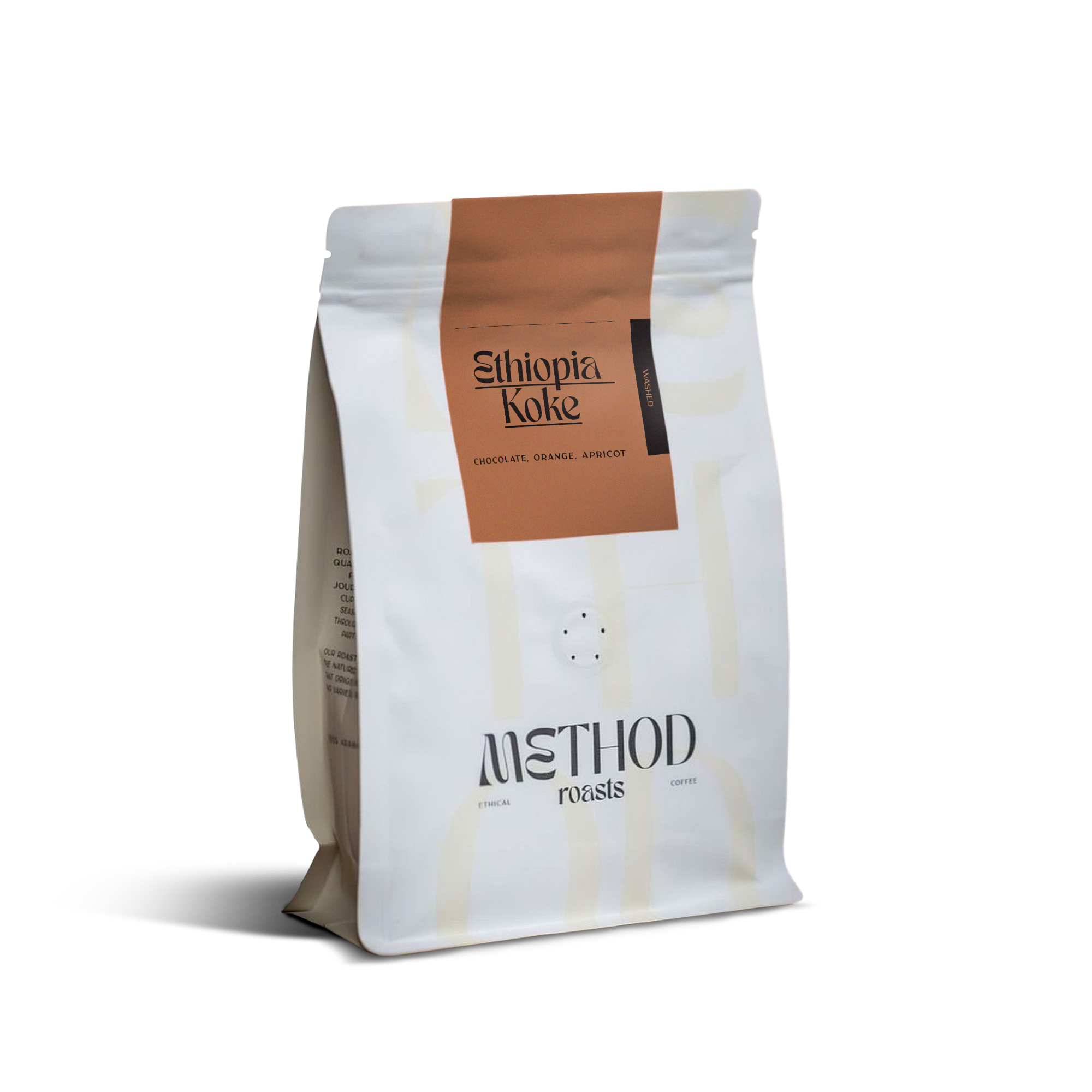
Ethiopia - Koke

Sale price£13.00

Koke washing station is named after Koke kebele, or town, where it is located in the Yirgacheffe district of the Gedeo Zone.

Perched on the hillside this family-owned-and-runs station was built in 2011 and has a long-standing reputation for quality.


TASTING NOTES:

With notes of cherry, apricot and orange blossom Koke is delicate, complex with good sweetness and flavour.

Grind Type: Whole Beans

Grind Type

Bag Size: 250g

Bag Size

PRODUCER

Koke washing station

REGION

Kochere, Southern Sidamo

HARVEST

November - January

ALTITUDE

1870 - 1950 MASL

VARIETY

Dega, Kudhume, Wolisho

PROCESS

Washed and sun dried


ABOUT

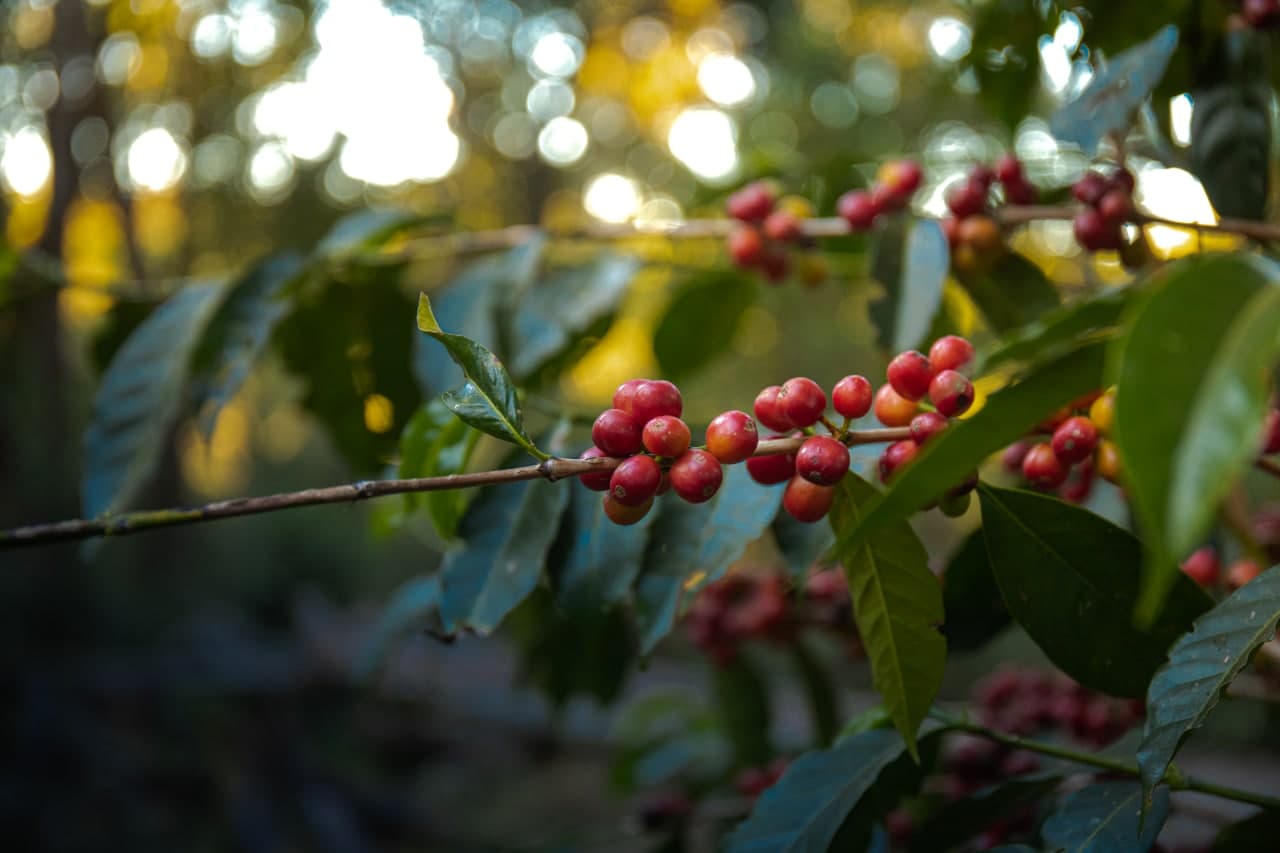
As is typical in Ethiopia, this coffee was grown by smallholders operating on a tiny scale. Growers hand-pick ripe, red cherry then deliver to the washing station for processing.

96 small scale farmers provided cherries to Koke this harvest most of them multi-generational family farmers.

At Koke station the lots are separated by elevation; our selection was picked from the highest grown coffees - the quality shines through.

Varietals

Wolisho, Dega and Kudhume are three coffee varietals that grow locally to Koke station.

Most farmers grow at least two of these varieties. There is limited knowledge on these varieties so it is not yet understood if they are specific variants or part of a larger family of coffee. Other areas also have these varietals under slightly different names, so it is not uncommon to find a small variance in spelling.

Kudhume (Kudhumi, Kurume) has a small bean size and is known for disease resistance, also popular in Guji. Dega sits in the middle with average bean size and tree height, whilst Wolisho (Walichu) exhibits a larger bean size. 

The names stem mainly from local indigenous trees – Dega is commonly used as firewood and has a reputation for it’s fragrant characteristics. Kudhume relates to the Kurume tree that produces small fruit with a good yield – the coffee varietal displays the same characteristics, and Wolisho resembles the characteristics of the tree too, being larger fruit, but an inconsistent yield year after year.

Washed Processing at Koke Station

Ripe coffee cherries are freshly sorted before depulping. Over-ripe and under-ripe beans are handpicked and separated before processing. After de-pulping, coffee is allowed to ferment naturally for 36-72 hours in the washing station’s 10 fermentation tanks. 

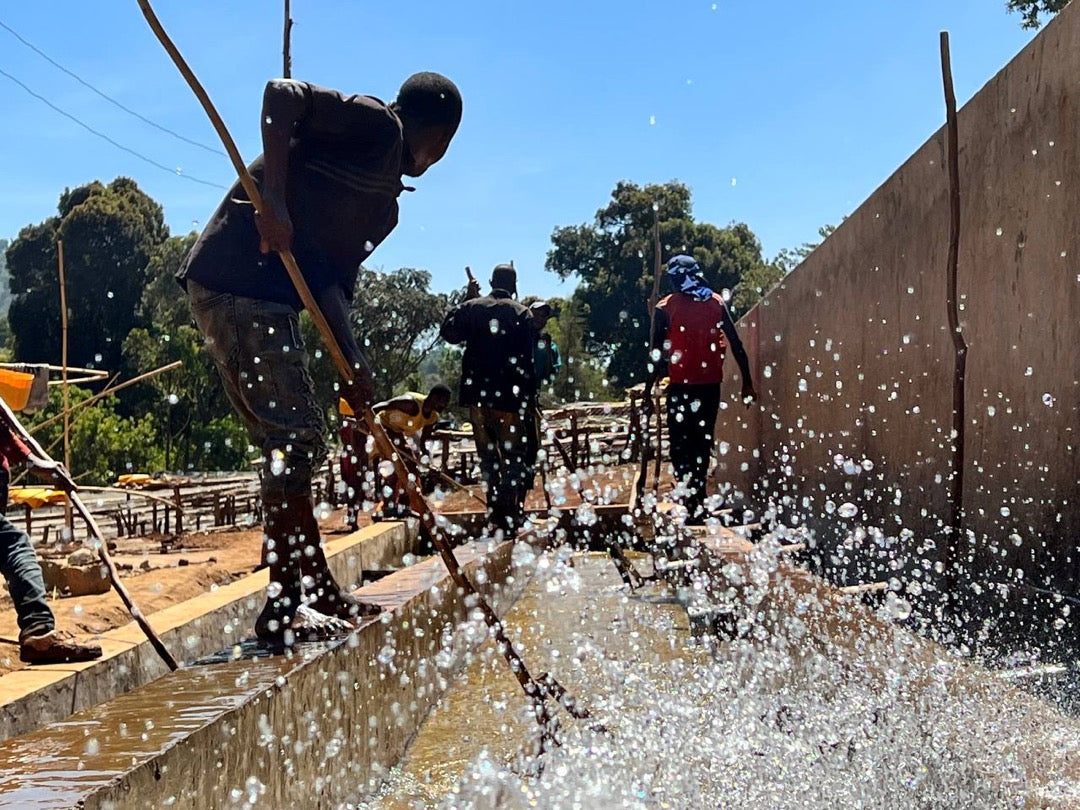
The fermented coffee is washed with clean running water, soaked in clean water with a pH of 7.8, and then dried for 18-21 days on Koke’s 89 raised beds to retain around 11.5% moisture. Dried parchment coffee is stored at the washing station warehouse until transportation to Addis Ababa for milling.